Shopify-Related FAQsShopify vs. Shopee and Lazada: Where to Set Up Shop?

Shopify vs. Shopee and Lazada: Where to Set Up Shop?

Shopify vs. Shopee and Lazada: Where to Set Up Shop?

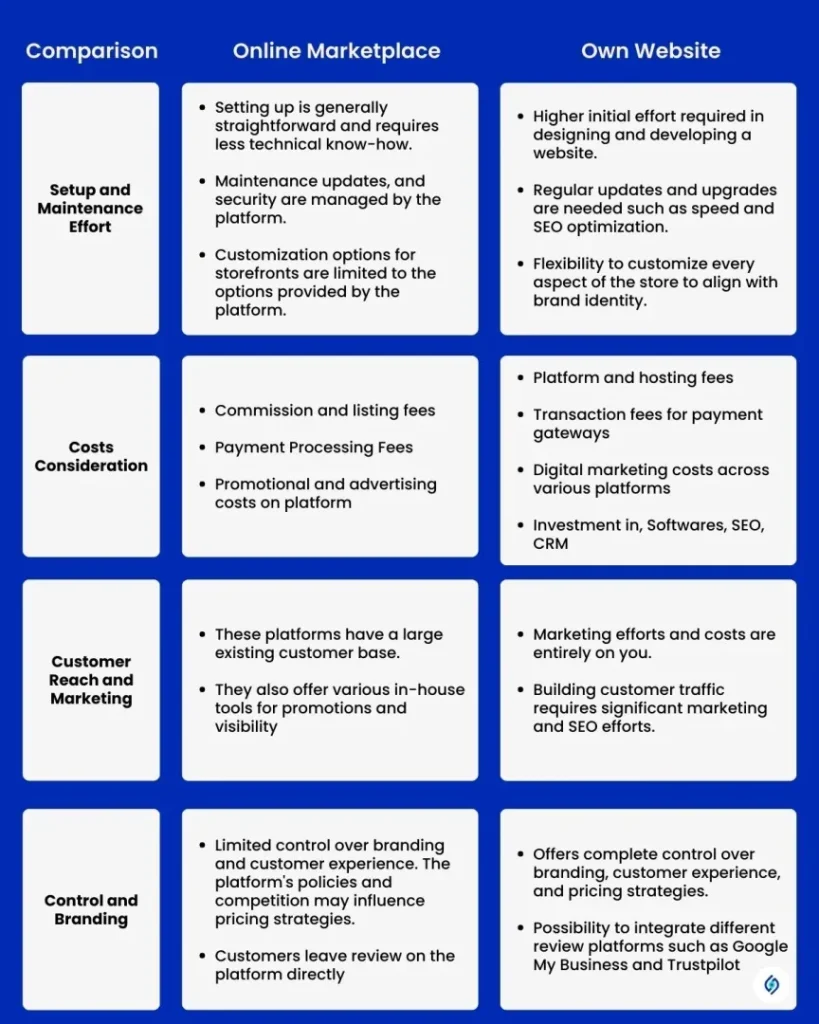
Quick Comparison Charts:

The short answer: sell on Shopify if you want margin, brand control, and repeat customers; sell on Shopee and Lazada if you want fast market entry and discovery traffic. Most successful Singapore brands eventually run both — marketplaces for acquisition, their own Shopify store for margin and loyalty.

This guide compares selling on Shopify versus Singapore’s marketplace giants across the metrics that actually decide profitability in 2026: setup effort, fees, customer reach, branding control, scalability, logistics, customer lifetime value, and trust.

How do Shopify and marketplaces compare on setup, fees, and reach?

shopify vs marketplace

1. Which is easier to set up and maintain?

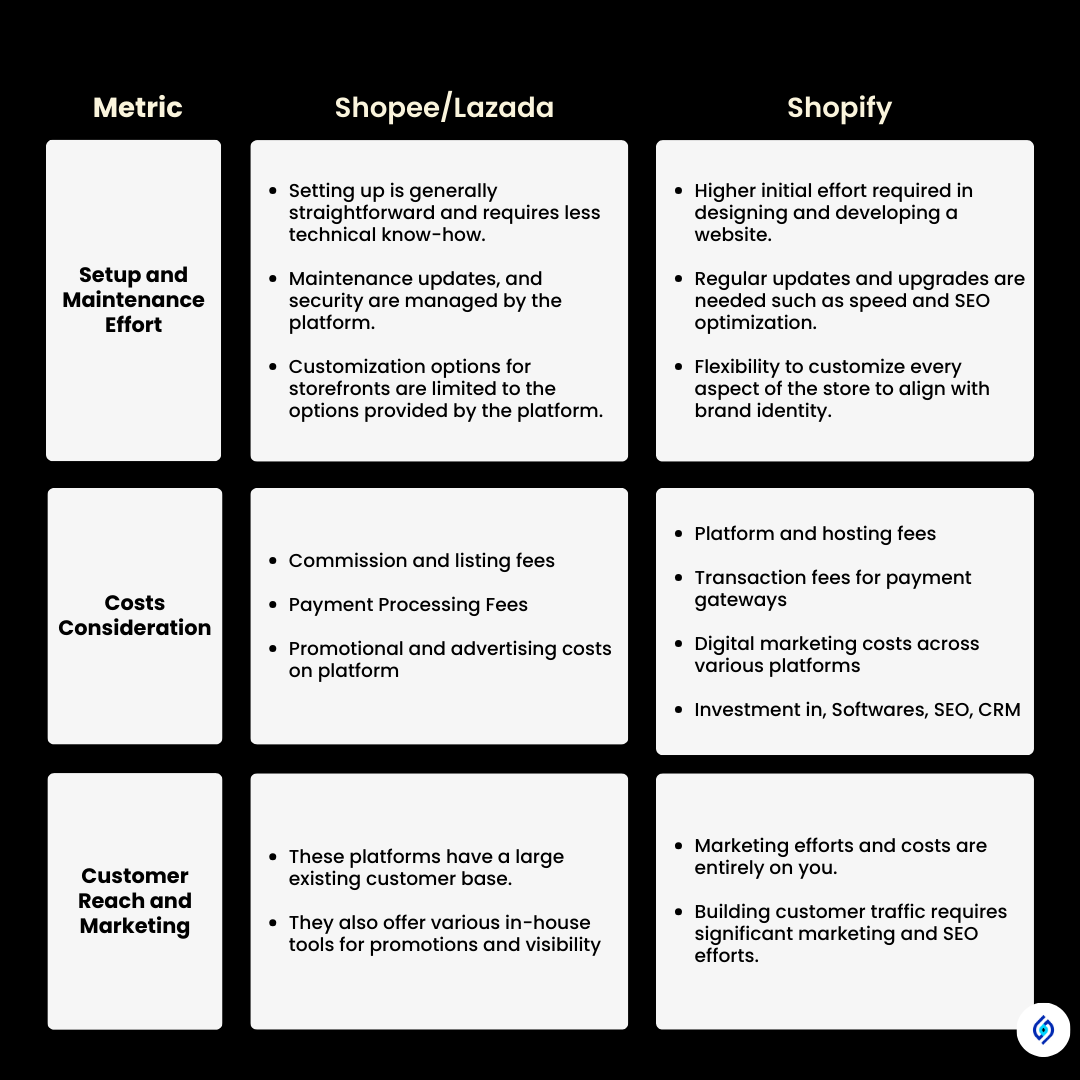
Marketplaces are faster to start; Shopify is easier to run as a real business. Shopee and Lazada give you a ready-made storefront within days, but limit customisation and control. Shopify is an all-in-one platform — inventory, SEO, payments, and multichannel selling in one place — designed for building a distinct online presence. A professionally built Shopify store takes 4–8 weeks but becomes an asset you own.

2. What are the real fees in 2026?

Marketplace fees have risen sharply. Shopee charges category-based commission plus a transaction fee, and added a 5% technical support fee in February 2026. Lazada raised marketplace commissions in February 2026, with general-category rates now meaningfully higher than two years ago — check each seller centre for your category’s current rate. Shopify charges a monthly subscription (Basic is SGD $39/month in Singapore) plus payment processing, but takes no commission on your sales — so your margins improve as you grow.

3. Where is the customer reach?

Marketplaces bring enormous built-in traffic with equally enormous competition — often decided on price. Shopify puts you in charge of acquisition: Google, Instagram, TikTok, email, and increasingly AI-driven discovery channels. You work harder for the first sale but own the customer relationship afterwards.

4. Who controls the brand experience?

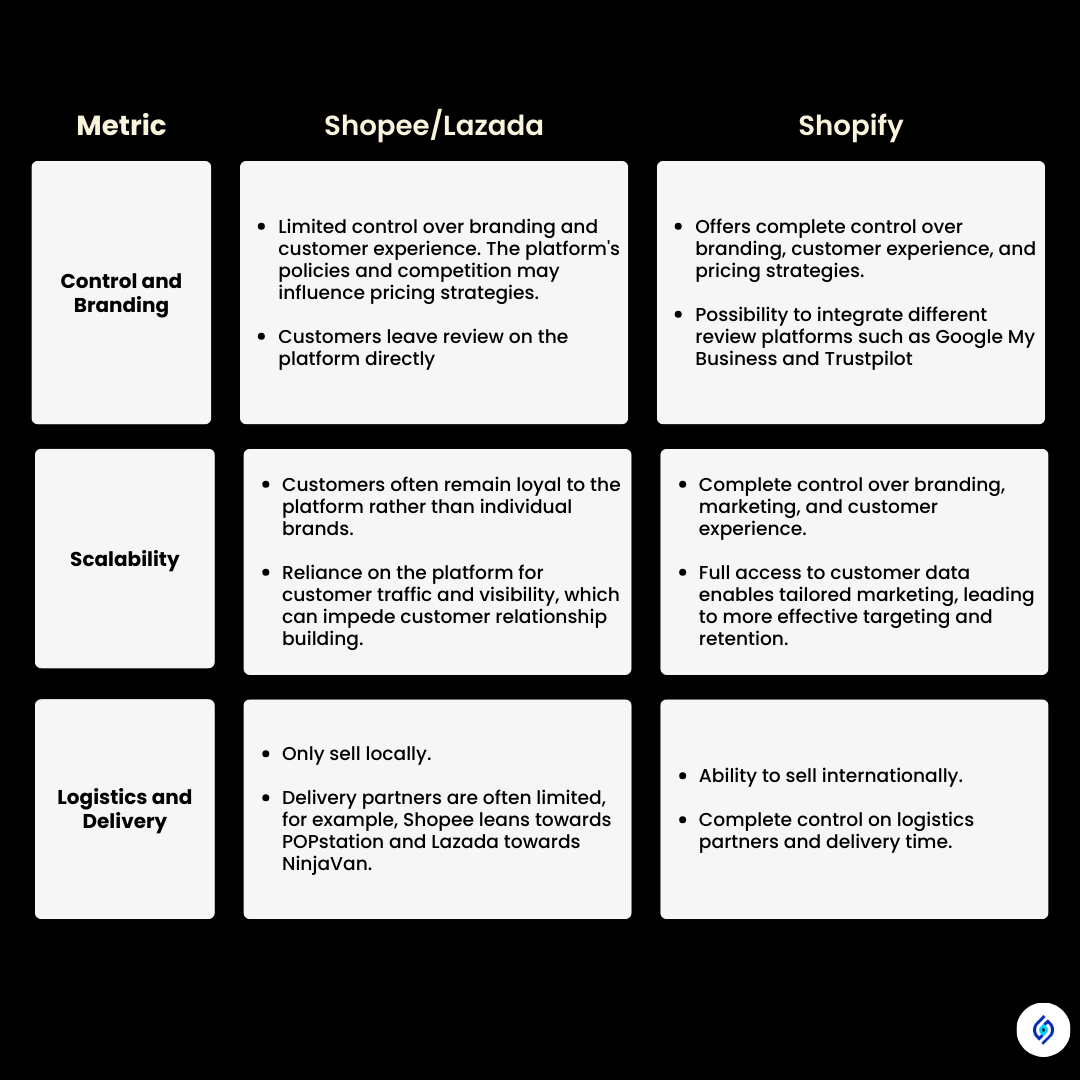
Shopify, decisively. Your store looks and behaves the way your brand needs — storytelling, custom pages, bundles, subscriptions. On a marketplace, the shopping experience belongs to the marketplace: your listing looks like every other listing, and shoppers remember Shopee, not you.

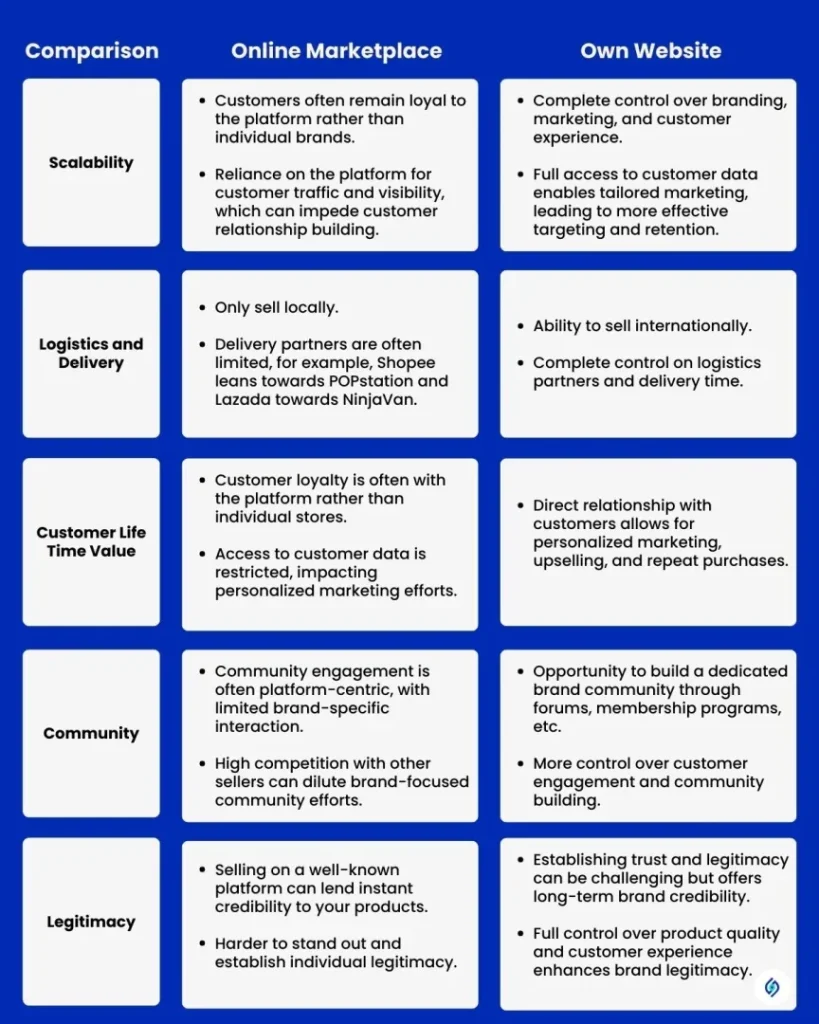
Which platform wins on scale, loyalty, and trust?

shopify vs marketplace 2

5. Which scales better?

Shopify’s app ecosystem and integrations make scaling into new markets, product lines, or retail smoother. Marketplaces scale volume within their walls, but you scale on their terms — algorithm, fees, and policy changes included.

6. How does logistics compare?

Both work well in Singapore. Marketplaces integrate their own logistics partners; Shopify connects to SingPost, Ninja Van, and J&T Express with fully customisable shipping rates and delivery options.

7. Where is customer lifetime value higher?

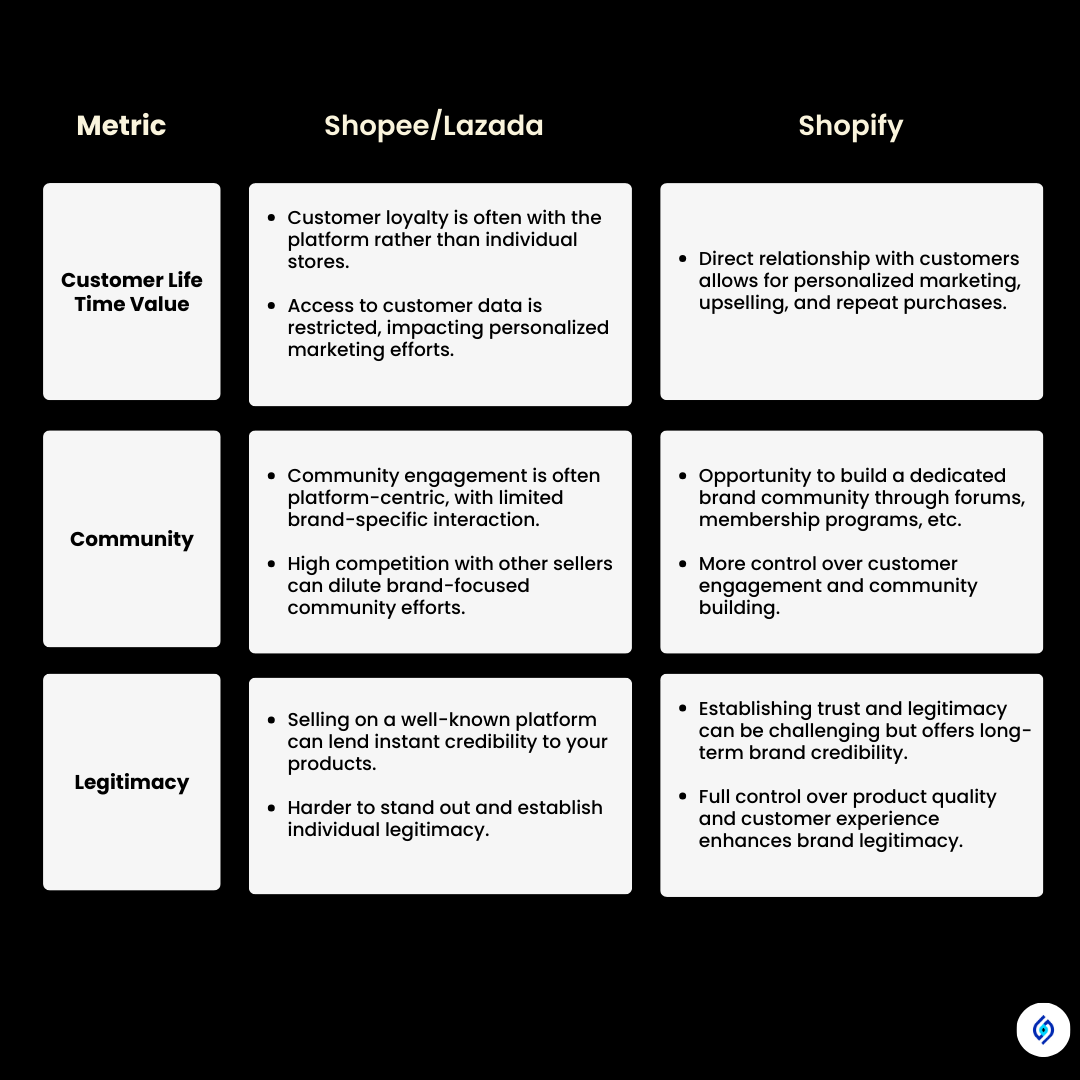
On your own store. Shopify lets you build a loyal base through personalised experiences, email flows, and community — repeat purchase behaviour that marketplace-centric shopping rarely produces, because the customer data and relationship stay with the marketplace.

8. Which feels more legitimate to buyers?

Marketplaces carry built-in trust; a well-built Shopify store builds its own through reviews, trust signals, secure checkout with PayNow and cards, and personal service. For premium and niche products, an owned store often signals more credibility than a marketplace listing.

So which should you choose?

Run marketplaces for discovery and volume, and a Shopify store for margin, brand, and repeat customers — the model most growing Singapore brands land on. If most of your revenue already comes from Shopee or Lazada, the highest-leverage next step is usually building your owned channel before fee rises squeeze you further.

Frequently asked questions

Is Shopify or Shopee better for a new Singapore seller?
Shopee is faster for testing demand; Shopify is better once you have a product that sells and want margin and repeat customers. Many sellers start on Shopee and add Shopify within the first year.

How much does a Shopify store cost in Singapore?
Professional builds range from SGD $3,000 to $30,000+; Soodo’s full builds start from SGD $6,000. See our Shopify development cost guide for a full 2026 breakdown.

Can I sell on Shopify, Shopee, and Lazada at the same time?
Yes — Shopify supports multichannel selling, and inventory can sync across platforms via integrations, letting you use marketplaces for acquisition while your own store captures loyalty.

Do marketplace fees really matter that much?
Yes. With Shopee adding a 5% technical support fee and Lazada raising commissions in 2026, sellers routinely give up a double-digit percentage of revenue — costs an owned Shopify store doesn’t carry.

Already selling but conversions are weak? Our Shopify store optimisation starts from SGD $1,000 — or get a free estimate for a new build.

Jessica Bong is the founder of Soodo, a Singapore-based Shopify development and CRO agency. She built and scaled her own eCommerce brand before starting Soodo, and has since audited 60+ Shopify stores. Jessica also teaches eCommerce at Equinet Academy. Her hands-on experience running a live brand gives Soodo an edge most agencies lack.

Drag View

What our clients say

Real reviews from the Shopify brand owners we have worked with.