
How a Shopify Store Builds Trust That Converts: My Interview with BOGOS
Featured on BOGOS. This is a short summary in my own words. Read the full interview on BOGOS →
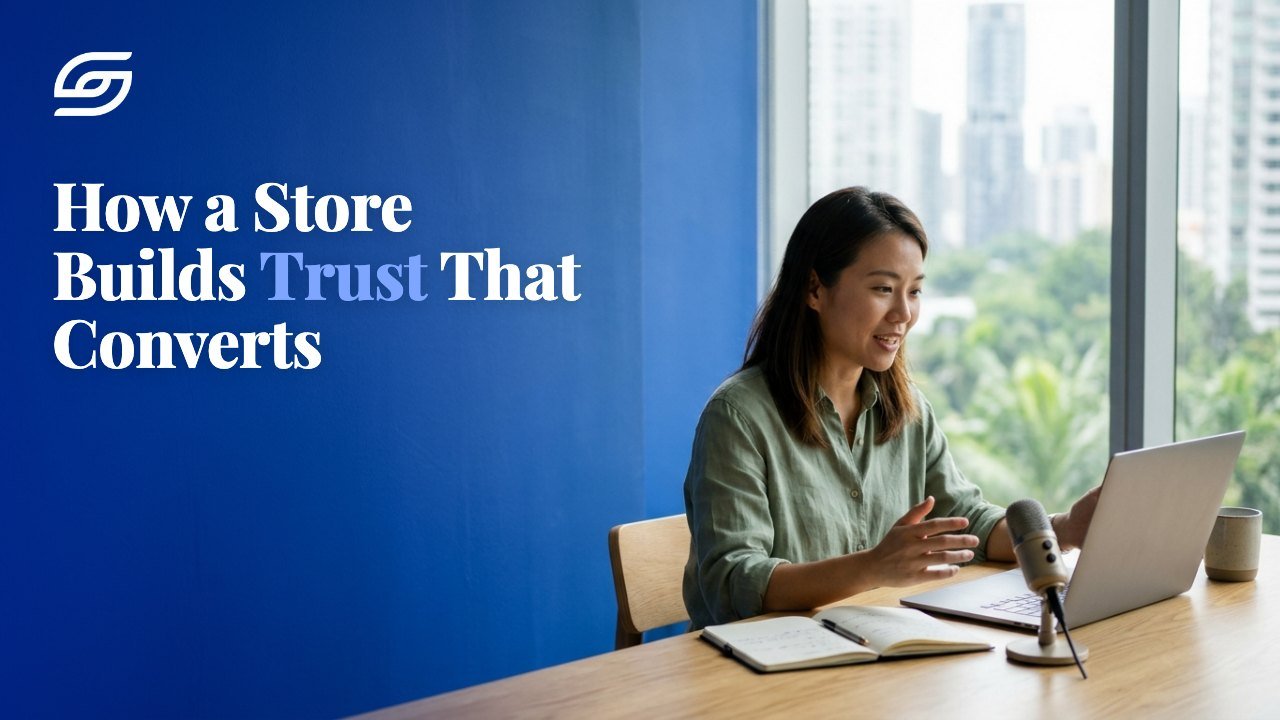
Tracy Nguyen from BOGOS asked me how a Shopify store builds the kind of trust that turns visitors into buyers. Here are the parts I would want every store owner to hear before BFCM.
It is rarely a traffic problem
Most merchants come to me sure they need more traffic. Usually the store is not converting the traffic it already has. The positioning is unclear, product information is missing, there is no proof, or checkout has friction. Sending more people into that just means more people leaving.
My one test: open the page where people decide, usually the product page, and ask yourself, “If I had never heard of this brand, would I buy from this page?” If you would need to ask a few questions first, that is the problem. Shoppers will not ask. They will leave.
You cannot discount your way out of a trust problem
If customers do not understand what they are buying, 20% off will not change that. A discount gives someone who is already convinced a reason to buy now. It can never convince them in the first place. The fix is not a lower price. It is a better page.
A clear returns line next to Add to Cart does more than ten badges in the footer.
Trust is about relevance and placement, not quantity. Put proof where people make the decision. The two trust builders most stores skip because they look too basic are an FAQ and a size or fit guide. They answer the exact questions that stop people from buying.
What to fix first, page by page
- Product page: reviews close to the price, real photos of the product in use, a size or how-to-use guide, an FAQ, and your returns policy near Add to Cart. Use collapsible tabs instead of long walls of text.
- Homepage: one plain sentence that tells a stranger what you sell, who it is for and why they should care, plus a clear path to your best sellers.
- Cart drawer: the total, the shipping cost and a clear next step. No suggestions that have nothing to do with what is already in the cart.
- Cart and checkout: delivery and returns reassurance, payment methods people know (PayNow, Atome, Apple Pay), and no surprise fees.
Two real examples
Pierzel makes bespoke leather shoes, handcrafted in Spain. Their ads sent first-time buyers to a product page that did not answer how the shoes fit or look when worn. We rebuilt only the product page template: their real Google reviews right under the price, an As Worn gallery, a size and fit guide, and a Book an Appointment option. We also added an FAQ to the homepage. Sales went up, and it did not come from a new discount. It came from a page that answered the questions.
Haus of Veil makes luxury care products for fine materials. For 11.11 we built a dedicated campaign page with a simple offer: free shipping over $60, and spend $80 to choose a free Cloud cleanser or Piano Wood Wipes. The rules are written in plain words, the gift is something their customers actually use, and the cart drawer shows a progress bar so shoppers always know what they have unlocked.
If you only have a few days before BFCM
Do not spend them on a bigger discount. Spend them on a trust check. Shop your own store like a stranger and do a full test purchase. Check shipping, delivery, returns and your discount terms. Make sure you only sell what you can deliver.
BFCM doesn’t fix a store. It amplifies it.
Thank you to Tracy and the BOGOS team for the conversation. The full interview has more detail, including how to match offers to what your customers need.

Jessica Bong
Jessica Bong is the founder of Soodo, a Singapore Shopify agency that builds, revamps and migrates Shopify stores, with every store set up to be found in AI search (GEO). She has spent over 10 years in ecommerce and runs her own Shopify brand, Patch&Bagel. Jessica is also a WSQ-certified Shopify trainer at Equinet Academy.