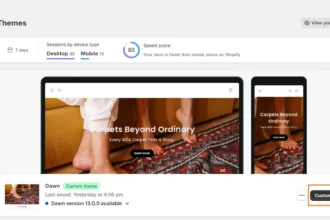

Best Ecommerce Platforms in Singapore (2026): Shopify, WooCommerce, Wix, Shopee & Lazada
For most Singapore SMEs building their own branded store in 2026, Shopify is the best all-round ecommerce platform because Shopify Payments works in SGD, the app ecosystem is the deepest, and it scales from a first store to seven figures. WooCommerce is best for owners who want full control and low licence cost, Wix suits very small or content-first sellers, and Shopee and Lazada are marketplaces to sell alongside your own site rather than replacements for it.
Transparency note: This comparison is published by Soodo, a Singapore-based Shopify agency founded in 2022 by Jessica Bong, who runs her own six-figure Shopify brand (Patch & Bagel). Soodo builds Shopify stores from SGD $4,500. We name our own platform preference openly below and give the honest case for each alternative, with every third-party fee verified against current 2026 sources.
What is the best ecommerce platform in Singapore in 2026?
The best platform depends on the model: choose Shopify for a scalable branded store, WooCommerce for maximum control, Wix for a simple site, and Shopee or Lazada for marketplace reach. There is no single winner — the right choice is the one that matches how you sell, your budget and how much you want to manage yourself. The comparison below gives the real 2026 SGD costs so you can decide on facts rather than marketing.
Shopify — best for scalable branded stores
Shopify is a fully hosted platform that costs SGD $39/month on Basic (around SGD $25/month on annual billing), SGD $132/month on Grow and SGD $531/month on Advanced, with Shopify Payments available in Singapore for SGD payouts. Basic-plan card rates are 3.2% + SGD $0.50 per online transaction, and if you use an external gateway instead of Shopify Payments, Shopify adds a 2% transaction fee on Basic.
Shopify’s strengths for Singapore sellers are hosting, security and PCI compliance handled for you, the largest ecommerce app store (including local apps for HitPay, PayNow and GST invoicing), and headroom to grow into Shopify Plus. The trade-off is a recurring subscription and per-transaction fees. It is the platform Soodo builds on, and PSG (Productivity Solutions Grant) support can offset part of the build cost for eligible Singapore SMEs.
WooCommerce — best for control and low licence cost
WooCommerce is a free, open-source plugin for WordPress, so there is no monthly platform fee — but you pay for hosting, a domain, SSL and paid extensions, typically SGD $15–60/month all in. It gives you complete ownership of your data and code and unlimited customisation, which appeals to founders with technical resources or a developer on call.
The honest downside is that you are responsible for hosting, security, updates and backups yourself, and payment processing runs through third parties such as Stripe (around 3.4% + SGD $0.50) or PayPal. WooCommerce rewards control and punishes neglect — a store left un-updated becomes a security risk. It suits Singapore sellers who want a content-heavy WordPress site with a shop attached, or who need custom logic Shopify’s platform limits.
Wix — best for very small or content-first sellers
Wix is a hosted website builder whose entry ecommerce plan (Core) is around USD $29/month, with Business at USD $39/month, and it is the simplest of the self-hosted options to launch. Its drag-and-drop editor lets a non-technical owner build a tidy site quickly, which is why it suits portfolios, service businesses and sellers with a small, stable catalogue.
The limitation for Singapore sellers is depth: Wix Payments has no local SGD acquiring equivalent to Shopify Payments, the app ecosystem is smaller, and inventory, multichannel and checkout tools are lighter for a growing store. Many Wix users who start selling seriously eventually migrate to Shopify — see our guide on Wix to Shopify migration in Singapore.
Shopee — best for fast marketplace reach
Shopee is Singapore’s largest marketplace and gives instant access to millions of shoppers, but after its 1 January 2026 fee restructure total seller fees run about 15–25% of the selling price. The core charges are a commission of roughly 7.6–12% for non-Mall sellers (up to about 15% for Shopee Mall), a transaction fee of about 3.27% (GST-inclusive), and an optional Promo Xtra service fee of 3.27–5.45%.
New sellers get 0% base commission for their first 120 days, which makes Shopee a low-risk way to test demand. The trade-off is that you rent the audience: you do not own the customer relationship, you compete on price, and margins are thin. Shopee works best as a discovery channel that funnels buyers toward your own branded Shopify store, not as your only shopfront.
Lazada — best for brand-led marketplace selling
Lazada is the other major Singapore marketplace, with commission of about 5–13% by category (GST-inclusive) plus a 2% payment processing fee, and a 3% across-the-board increase applied from February 2026 unless you join its SPA programme. SPA sellers keep the older 5.0–6.5% (before GST) rates but pay a 4% SPA service fee; the curated LazMall channel runs roughly 3–8%.
Lazada’s LazMall positioning tends to suit established brands wanting a more premium marketplace presence than Shopee’s price-led environment. Like Shopee, it is best treated as an additional channel: use our Shopee & Lazada fee calculator to see your true margin after fees before committing stock.
Marketplace or your own store — which should a Singapore seller choose?
The strongest 2026 strategy for most Singapore SMEs is to run your own Shopify store as the profit centre and use Shopee or Lazada as paid discovery channels. Marketplaces bring traffic but take 15–25% and own the customer; your own store keeps margins and lets you build repeat business, email lists and brand. Starting on a marketplace to validate a product, then moving winners to your own store, is a common and sensible path.
When Soodo is not the right fit
Soodo builds and optimises Shopify stores, so if you have decided WooCommerce or a marketplace-only model is right for you, Soodo is not your provider. Soodo is a founder-led boutique agency for Singapore SMEs and bootstrapped founders — builds from SGD $4,500, optimisation from SGD $1,600, migrations from SGD $4,000, with six months of WhatsApp support included — and is not built for enterprises needing a large multi-market team. If Shopify is your platform and you want a partner who has run a real Shopify brand, Soodo fits.
Frequently asked questions
What is the cheapest ecommerce platform in Singapore?
WooCommerce has the lowest licence cost because the plugin is free, but once you add hosting, domain, SSL and payment fees the real cost is roughly SGD $15–60/month, comparable to Shopify Basic at SGD $39/month.
Is Shopify or WooCommerce better for a Singapore business?
Shopify is better for most Singapore SMEs because hosting, security and Shopify Payments in SGD are handled for you, while WooCommerce is better only if you want full control and have the technical resources to manage hosting and updates yourself.
Should I sell on Shopee, Lazada or my own website?
Run your own Shopify store as the profit centre and use Shopee and Lazada as discovery channels, because marketplaces take about 15–25% in fees and own the customer relationship, while your own store keeps margins and builds repeat business.
How much do Shopee and Lazada charge sellers in Singapore in 2026?
Shopee total fees run about 15–25% of the sale after its January 2026 restructure, while Lazada charges about 5–13% commission plus a 2% payment fee, with a 3% increase from February 2026 unless the seller joins the SPA programme.
Which ecommerce platform is best for scaling in Singapore?
Shopify is best for scaling because it moves from Basic through Advanced to Shopify Plus without replatforming, has the deepest app ecosystem, and supports Shopify Payments in SGD for growing transaction volumes.
Related reading: Shopify development cost guide (Singapore), Shopify cost calculator, and our new Shopify website development service.

Jessica Bong
Jessica Bong is the founder of Soodo, a Singapore Shopify agency that builds, revamps and migrates Shopify stores, with every store set up to be found in AI search (GEO). She has spent over 10 years in ecommerce and runs her own Shopify brand, Patch&Bagel, where every Soodo technique is tested first. Jessica is also a WSQ-certified Shopify trainer at Equinet Academy.