
Launch Shopify Customer Accounts Fast With a Founder Led Checklist
Shopify customer accounts now give shoppers a passwordless, self-service hub for orders, returns and profiles — enable New Customer Accounts to cut support tickets and lift repeat purchases. The system replaces the old login form with something closer to a mini customer dashboard, complete with native social sign-in and a proper developer API underneath it.
TL;DR:
- Up to 365-day session persistence ensures returning customers are recognized, reducing login friction and speeding up checkout completion.
- Shopify offers multiple sign-in options, including passwordless email OTP, native Google and Facebook sign-in, and optional Store Pay sign-in, tailored to customer preferences.
- Customising account areas requires UI extensions, not theme files, and often benefits from third-party apps for features like loyalty programs or wishlists.
- Merging duplicate customer profiles must be done manually in admin, as customers cannot self-merge by changing their email address.
- Proper setup and testing of sign-in flows, support for saved payment methods, and tracking key metrics like repeat purchase rate are essential for a successful launch.
Table of Contents
- What do New Customer Accounts include?
- How do you enable customer accounts in Shopify admin?
- Which sign-in options should you offer customers?
- Can you customise the customer account area?
- How do you manage customer profiles and data in admin?
- What API options exist for developers?
- What’s a practical launch checklist for customer accounts?
- How Soodo approaches customer account projects
- Where Soodo fits into your customer accounts project
- Where to go for the official documentation
- Sources
- FAQ
What do New Customer Accounts include?
Forget the old “email and password, forgot your password, check your email” loop. New Customer Accounts give shoppers a genuine self-service hub, and merchants get fewer support tickets in exchange.
The core feature set covers:
- Full order history with live status tracking, not just a static confirmation email
- Self-service returns initiated directly from the account, no email to support needed
- A “Buy again” shortcut that turns a repeat purchase into a two-click job
- Saved addresses and autofilled checkout details for logged-in sessions
Sessions can persist for up to 365 days, so a customer who signs in once in January is often still recognised at checkout in November. That single detail explains why stores report faster checkout completion after switching: the platform simply stops asking returning customers to re-enter what it already knows.
Shopify frames this as a deliberate shift, moving accounts from a simple login gate into a genuine customer self-service hub designed to reduce support load and encourage repeat orders. For a store fielding a steady stream of “where’s my order” emails, that reframing is the whole point.
How do you enable customer accounts in Shopify admin?
Enabling accounts takes minutes; getting the configuration right for your store takes a bit more care. Here’s the sequence:
- Go to Settings → Customer accounts in your Shopify admin.
- Choose the account type: accounts can be optional, required at checkout, or disabled entirely, depending on how much friction you’re willing to trade for data capture.
- If you’re still running the older login system, use the upgrade prompt to migrate to New Customer Accounts rather than maintaining the legacy version indefinitely.
- Open the Authentication panel and enable sign-in links for passwordless entry.
- Connect Shop and, where offered in your market, native Google and Facebook sign-in.
- Toggle on saved payment methods if you want returning customers to check out even faster.
- Run a full test order as a new customer, then a returning one, checking both flows end to end.
Watch for three common pitfalls during testing: mismatched redirect URIs on any connected identity provider, browser or CDN caching that shows a stale sign-in state, and forgetting that saved payment methods sit behind their own separate toggle.
Pro Tip: Test your sign-in flow in a private browser window. Regular sessions can mask redirect or caching bugs that only show up for a genuinely new visitor.
Which sign-in options should you offer customers?
Not every sign-in method suits every store, and the right mix depends on your customer base and how much identity control you need.
- Passwordless email OTP. The customer enters their email, receives a one-time six-digit code, and is signed in without ever setting a password. This is the default experience Shopify now pushes forward, and for most stores it’s the simplest option to configure and support.
- Sign in with Shop. This links to Shop Pay and can use saved passkeys, giving customers who already use the Shop app a near-instant login with no code to type.
- Native Google and Facebook sign-in. Shopify added native support for both providers directly in New Customer Accounts, cutting out the need for a third-party app for those two platforms specifically.
- Other social providers. If you need Apple, X, or a regional provider Shopify doesn’t support natively, you’ll still need a third-party app, or you may need to weigh keeping legacy accounts for that integration.
- Shopify Plus identity provider. Plus merchants can connect a custom identity provider to replace the default sign-in entirely, syncing attributes like email, name and address across your wider tech stack via OIDC.
The identity provider route is powerful for brands running headless storefronts alongside multiple apps, but it demands careful handling of redirect URIs, token scopes and refresh behaviour, which is not a weekend project for most in-house teams.
Can you customise the customer account area?
You can, but not through your theme. This trips up a surprising number of merchants who go looking for account templates in their theme editor and find nothing to edit.
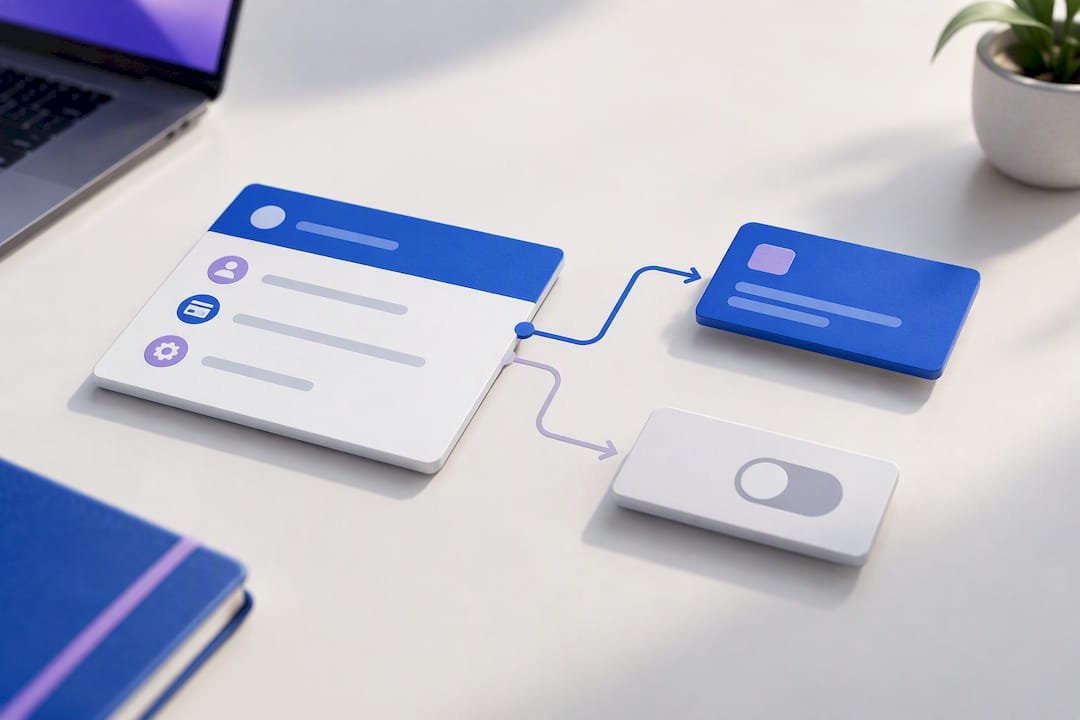
Customising New Customer Accounts requires Customer Account UI Extensions. Theme liquid files simply don’t reach into this area any more, since the new account system runs on a separate, extension-based architecture rather than your storefront theme.
Common extension targets include:
- The order index page, useful for surfacing loyalty points or a reorder prompt
- The order status page, where a store might add tracking widgets or upsell blocks
- The profile page, for capturing extra preference data beyond name and address
For loyalty programmes, wishlists, or social login beyond the native Google and Facebook options, an app is usually the faster route rather than building a bespoke extension from scratch. Our own notes on Shopify integrations that actually hold up in production cover this trade-off in more detail.
Saved payment methods deserve a separate mention: they must be switched on explicitly in the admin. They are not enabled by default once you turn on customer accounts generally, which catches out stores that assume the feature came bundled in.
Pro Tip: Before commissioning a custom extension, check whether an existing app already covers the feature. Extension development is the right call for something genuinely bespoke to your brand, not for a feature ten other apps already sell.
How do you manage customer profiles and data in admin?
Day-to-day account management is mostly straightforward, with two exceptions worth knowing before they become a support ticket.
- You can edit a customer’s profile, addresses and marketing consent directly from their record in admin.
- Changing a customer’s email can affect their marketing consent status, so check that field after any manual edit rather than assuming it carries over.
- Customers cannot merge duplicate profiles themselves by simply changing their email address on one account. Merging has to happen in the Shopify admin, where staff combine order history and details from the duplicate into the primary record.
- For data requests, whether erasure or export, handle them through Shopify’s customer data tools and keep tagging and segmentation clean so a request doesn’t get lost among stale customer tags.
Duplicate profiles usually appear when a customer checks out as a guest first, then creates an account with a slightly different email later. Catching these early, before order history splits across two records, saves a genuinely awkward support conversation down the line.
What API options exist for developers?
For anyone building headless or extending accounts beyond what the admin panel offers, Shopify exposes a proper API surface rather than a workaround.
- The Customer Account API starts with a discovery endpoint at
.well-known/customer-account-api, which returns the GraphQL and MCP endpoints your integration needs. - GraphQL is the actual API surface for account operations: fetching orders, updating profile fields, managing addresses.
- Refresh token behaviour varies by client type. Only certain configured clients, such as headless or Hydrogen storefront setups, receive refresh tokens at all, which directly affects how long a session survives compared with Shopify’s standard defaults.
- Query cost and rate limits apply as with any Shopify GraphQL API, so server-side caching is worth building in early rather than retrofitting once you hit a ceiling.
- UI extensions run in a sandboxed environment within the account area itself, and Shopify’s CLI tooling supports local preview during development, so test changes there before deploying to a live store.
None of this is exotic if you’ve worked with Shopify’s other GraphQL APIs before, but the discovery endpoint and refresh token nuance are specific enough to New Customer Accounts that they catch out developers used to the older system.
What’s a practical launch checklist for customer accounts?
Turning a feature on is easy when you leverage Shopify SEO Automation to measure and optimize the impact of customer accounts on conversion and retention. Turning it into fewer support tickets and more repeat orders takes a bit of discipline around what you measure afterwards.
- Enable New Customer Accounts and pick the account type that matches your checkout strategy.
- Configure authentication: sign-in links at minimum, Shop and native social sign-in where relevant to your customers.
- Switch on saved payment methods explicitly, since it won’t happen automatically.
- Add a visible “Buy again” or reorder call-to-action somewhere a returning customer will actually see it.
- Test the full returns flow yourself, end to end, before a real customer finds a broken step.
- Track three numbers monthly: repeat purchase rate, account activation rate, and support-ticket volume tied to order status questions.
If any of those numbers move the wrong way after launch, or if you’re weighing a headless build or a Plus identity provider integration, that’s usually the point where DIY configuration stops being enough and a proper technical review starts paying for itself.
Pro Tip: Set a calendar reminder to check activation rate 30 days after launch. Most of the drop-off from a poorly configured sign-in flow shows up in that first month, not later.
How Soodo approaches customer account projects
Experience shows that customer accounts rarely fail simply because of selecting the wrong sign-in method. They fail because nobody connected the feature to a measurable outcome, so the accounts sit there half-configured while support tickets keep arriving unchanged.
Our approach is founder-led and conversion-first: every account configuration we touch gets tied to a specific target, whether that’s a lift in repeat purchase rate or a measurable drop in “where’s my order” emails. We’d rather ship six well-tested account settings than twenty untested ones.
If your account setup feels like it’s underperforming, or you’re planning a headless build that needs a custom identity provider, a proper technical review usually surfaces the gap faster than more guesswork.
— Soodo
Where Soodo fits into your customer accounts project
Configuring and testing New Customer Accounts properly, tied to measurable outcomes, is the kind of work done daily for brands in Singapore and Southeast Asia.
If you’re launching a new store, Soodo’s new Shopify website development service builds customer accounts, saved payments and reorder flows in from the start, from 4,500 SGD one-off. If accounts are already live but underperforming, quiet activation rates or too many support tickets are usually a UX problem rather than a feature problem, and that’s exactly what existing store optimisation work is built to fix, from 1,600 SGD one-off. For stores still running legacy accounts or migrating off another platform entirely, our platform migration service handles the switch properly, from 4,000 SGD one-off.
Projects are managed with experienced oversight focused on eCommerce conversion and revenue results, rather than relying solely on templates or less experienced freelancers. If you want a second opinion on whether your current account setup is pulling its weight, get in touch and we’ll walk through it together.
Where to go for the official documentation
For the underlying detail this guide draws on, go straight to Shopify’s own sources:
- Shopify Help Center: New customer accounts, for the full merchant-facing feature list
- Shopify dev docs: Customer Account API, for the discovery endpoint and GraphQL reference
- Shopify Help Center: Connecting an identity provider, for Plus-specific setup
- Froonze’s guide to native social login, for a practical walkthrough of the 2025 Google and Facebook rollout
Sources
- Shopify Help Center | New customer accounts
- Shopify changelog — Newly created shops will have New Customer Accounts enabled
- Shopify changelog — Use your own identity provider for customer login
- Froonze — How to enable native social logins for Shopify New Customer Accounts
FAQ
What are customer accounts in Shopify?
Customer accounts are a self-service area where shoppers view order history, track shipments, initiate returns and reorder without contacting support. Shopify’s New Customer Accounts replaced the old password-based login with a passwordless, extension-based system.
How do you combine duplicate customer accounts on Shopify?
Customers can’t merge their own duplicate profiles by changing an email address. Store staff need to merge the records manually in Shopify admin, combining order history from the duplicate into the primary profile.
How do you turn off customer accounts on Shopify?
Go to Settings → Customer accounts in admin and switch the account type to disabled, which removes the sign-in prompt from checkout entirely. Most stores instead set accounts to optional, since a required login step at checkout can add unnecessary friction for first-time buyers.
What is the difference between legacy and New Customer Accounts?
Legacy accounts use a traditional email-and-password login controlled through theme files, while New Customer Accounts run on a separate, extension-based system with passwordless sign-in and a proper self-service hub. Shopify now sets New Customer Accounts as the default for newly created shops, so upgrading from legacy is worth doing sooner rather than later.
Does Soodo help set up or optimise Shopify customer accounts?
Yes, Soodo configures and optimises customer accounts as part of both new Shopify builds and existing store optimisation projects. Pricing for these services starts from 4,500 SGD for new builds and from 1,600 SGD for optimisation work, with full details available on request.
Recommended

Jessica Bong
Jessica Bong is the founder of Soodo, a Singapore Shopify agency that builds, revamps and migrates Shopify stores, with every store set up to be found in AI search (GEO). She has spent over 10 years in ecommerce and runs her own Shopify brand, Patch&Bagel, where every Soodo technique is tested first. Jessica is also a WSQ-certified Shopify trainer at Equinet Academy.