
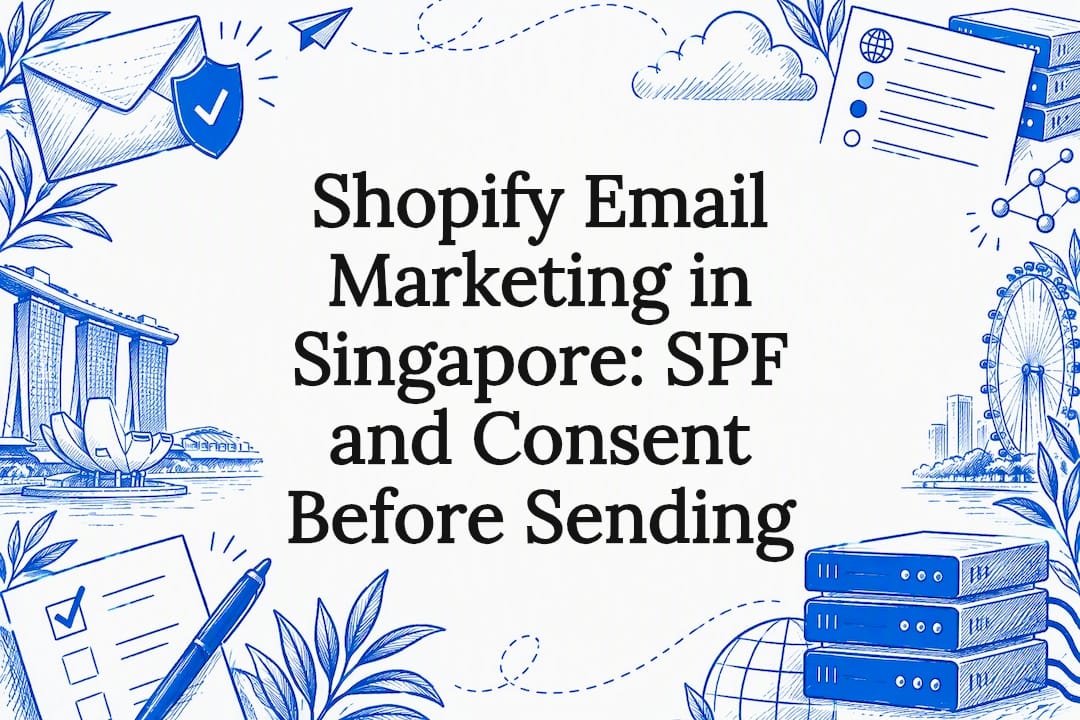
Shopify Email Marketing in Singapore: SPF and Consent Before Sending
Start with Shopify Messaging, but authenticate your sending domain, monitor deliverability and confirm consent before you launch a single campaign. Those three priorities decide whether your emails land in the inbox or disappear into spam, and getting them right matters more than clever subject lines. If you need advanced segmentation, predictive send times or deep A/B testing later, a specialist app can sit on top of what you’ve already built.
TL;DR:
- Eligible Shopify plans include 10,000 free emails monthly, and abandoned checkout automations do not count toward that allowance.
- Warm new domains over two to three weeks, beginning with engaged subscribers, and monitor for roughly 95% delivery and bounce rates below 2%.
- Send abandoned checkout messages after two to four hours, 24 to 48 hours, and a few days; save discounts for the second or third message.
- Recovery reports exclude checkouts created with only a phone number or flagged high risk by Shopify Payments, so reported results can understate recovered sales.
- Singapore direct marketing requires express consent; commercial messages need a working unsubscribe method, accurate headers and subject information, and clear advertising identification.
Table of Contents
- What Shopify Messaging includes and how its pricing works
- Setting up Shopify Messaging and authenticating your sending domain
- Deliverability benchmarks and how to keep your emails out of spam
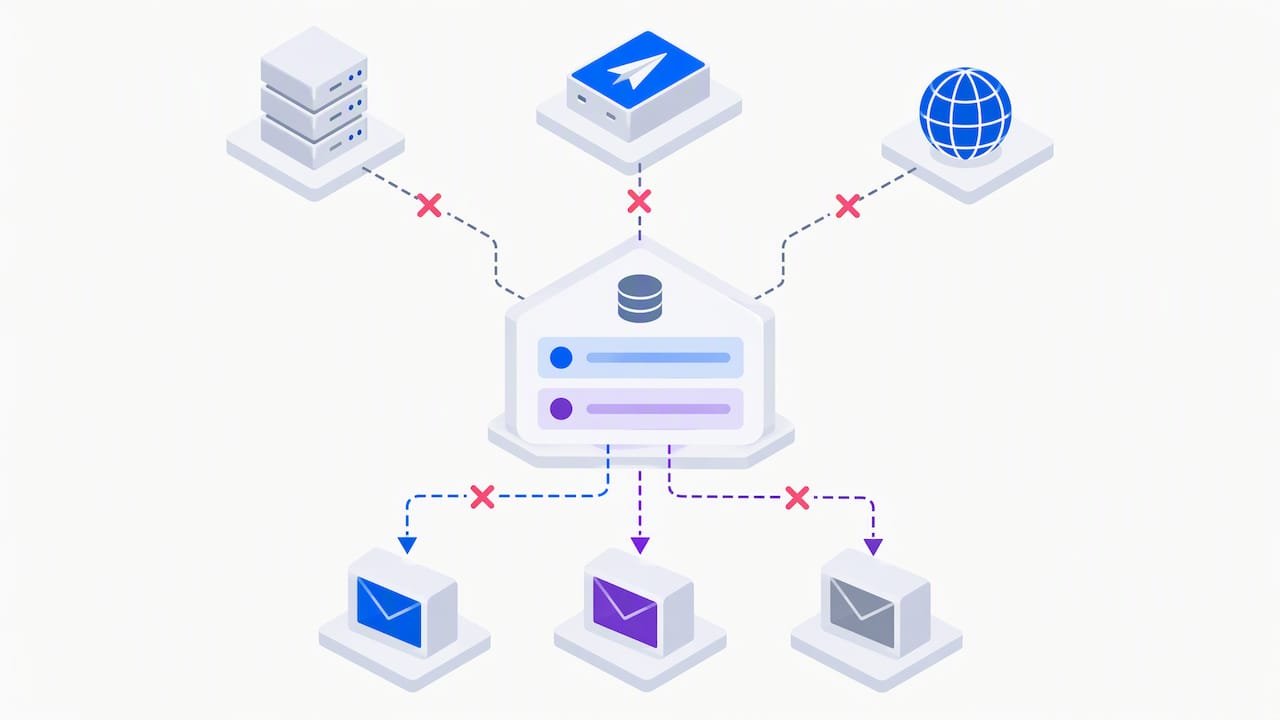
- Running abandoned cart and other automations from Shopify
- Building a list worth emailing and segmenting it properly
- Staying compliant: consent and messaging rules you need to follow
- How an agency handles email setup when you’d rather not do it yourself
- Inbox placement matters more than clever copy
- Get hands-on help setting up email that actually reaches inboxes
- FAQ
- Sources
What Shopify Messaging includes and how its pricing works
Shopify Messaging is the native marketing tool built into every Shopify store, and it covers more ground than most owners expect. It handles email, SMS and WhatsApp messaging, plus automations for abandoned checkouts, welcome series and post-purchase follow-ups, all from the same dashboard where you manage orders and products.
The free allowance is generous for smaller stores. Eligible plans get 10,000 free emails per month, with tiered pricing once you go over that. Abandoned checkout automations don’t count against your monthly allotment, which matters if cart recovery is doing most of your heavy lifting.
Here’s what decides whether you stay native or bring in a specialist platform:
- Email volume: once you’re regularly sending past the free tier, compare overage costs against a dedicated platform’s pricing.
- Segmentation depth: Shopify Messaging handles basic segments well, but complex behavioural triggers often need more.
- Testing needs: if you want structured A/B testing across subject lines, send times and content, a specialist tool usually does it better.
- Integration complexity: stores running multiple sales channels sometimes need a platform built for cross-channel data.
For most stores under a few thousand orders a month, native Messaging covers the job without added subscription cost. We’ve written more on when native tools stop being enough if you’re weighing that decision for your own store.
Setting up Shopify Messaging and authenticating your sending domain
Getting email marketing right on Shopify is less about picking the perfect app and more about getting the plumbing correct first. Here’s the sequence that works.
- Confirm plan eligibility: check your Shopify plan supports Messaging and review your current email allowance in the Marketing section.
- Install and enable automations: turn on the built-in automations for abandoned checkout, welcome and post-purchase flows from Apps > Messaging.
- Verify your sender email: add and confirm the email address you’ll send from inside Shopify’s settings.
- Configure SPF and DKIM: add the DNS records Shopify provides to your domain host. Shopify’s deliverability guidance walks through authenticating with SPF, DKIM and DMARC, and most registrars need a CNAME entry added at the root or subdomain level.
- Check for DNS quirks: some providers need CNAME flattening or extra steps for DKIM selectors, so use a DNS lookup tool to confirm the records propagated before sending anything.
- Register with Google Postmaster Tools: Gmail doesn’t share detailed spam complaint data with Shopify, so this is the only way to see your actual reputation with Gmail recipients.
- Send a small test batch: start with a limited segment, perhaps 200 to 500 engaged subscribers, and watch open rates, bounces and spam complaints closely.
- Ramp volume gradually: increase send size over several campaigns rather than blasting your full list on day one, giving ISPs time to build trust in your new authentication.
Pro Tip: Warm up a new sending domain over two to three weeks, starting with your most engaged subscribers before you email your full list.
This ramp matters more than most owners assume. Mailbox providers watch sending patterns, and a sudden jump from zero to thousands of emails on a freshly authenticated domain reads as suspicious, even when every message is legitimate. A slower build gives you time to catch authentication issues before they affect your whole list, and it gives Gmail, Outlook and Yahoo a reason to trust the domain rather than filter it.
If you’re setting up a Shopify store for the first time, our guide to getting started covers the foundational steps before email even enters the picture.
Deliverability benchmarks and how to keep your emails out of spam
Deliverability is the single biggest lever in email marketing, bigger than subject line testing or send-time optimisation, because none of that matters if your emails never reach the inbox.
Shopify’s own benchmarks give ecommerce stores a practical target: aim for roughly 95% delivery and keep bounce rates below 2%. Spam complaints should stay well under the thresholds that trigger ISP filtering, typically very low percentages of total sends.
If your numbers slip below those marks, work through this list before you touch your creative:
- Clean your list: remove hard bounces immediately and suppress subscribers who haven’t opened anything in six months or more.
- Check authentication first: a missing or misconfigured SPF, DKIM or DMARC record is the most common cause of a sudden deliverability drop.
- Slow your sending cadence: too many emails too quickly often triggers spam filters even from an engaged list.
- Review your content: excessive links, spam-trigger words and image-heavy emails with little text can all hurt placement.
- Watch your complaint rate: a spike usually means your targeting or frequency needs adjusting, not your subject lines.
Shopify recommends ecommerce stores target around a 95% delivery rate with bounce rates under 2%, a useful baseline to check your own metrics against each month.
Authentication isn’t a one-time task either. Domain hosting changes, new sending tools and DNS migrations can all break SPF or DKIM records without warning, so it’s worth checking them whenever you make changes to your domain setup or add a new sending platform.
Running abandoned cart and other automations from Shopify
Abandoned checkout emails are usually the highest-return automation any Shopify store can run, because the recipient has already shown clear buying intent.
- Enable the automation: go to Apps > Messaging > Automations and turn on the abandoned checkout flow. Shopify pulls in product images, cart contents and pricing automatically.
- Set your timing: a three-email sequence sent at roughly 2 to 4 hours, 24 to 48 hours, and a final follow-up a few days later tends to recover the most revenue without feeling pushy.
- Add a discount selectively: reserve a discount code for the second or third email rather than the first, so you’re not training shoppers to abandon carts for a deal.
- Personalise with cart data: pull in the specific product names and images from the abandoned cart rather than sending a generic reminder.
- Check the abandoned checkouts report: review recovery performance regularly, since the automation won’t trigger for checkouts created with only a phone number or flagged as high risk by Shopify Payments, which can make raw recovery figures look lower than actual recovered revenue.
Beyond cart recovery, the same automation engine handles welcome series for new subscribers, post-purchase follow-ups asking for reviews or reorders, and re-engagement sequences for lapsed customers. Each one runs on the same authentication and deliverability foundation you’ve already set up, so there’s no extra technical lift once the groundwork is done.
Building a list worth emailing and segmenting it properly
A smaller, engaged list consistently outperforms a larger, cold one, because every unopened email and spam complaint damages your sender reputation.
- Checkout opt-in: the single highest-quality capture point, since the person just bought from you.
- Post-purchase: ask again in your order confirmation or thank-you page for subscribers who skipped the first prompt.
- On-site pop-ups: effective when tied to a genuine incentive and timed to exit intent rather than firing immediately.
- Segment by behaviour: build out welcome, high-value customer, lapsed and browse-abandon segments rather than emailing your whole list every time.
Suppressing inactive subscribers and targeting segments that actually want to hear from you lowers spam complaints and lifts open rates across the board. A welcome series of three to four emails over the first week or two, aimed at driving a first or second purchase, is a reliable structure to start with. For practical capture tactics, we’ve detailed three native touchpoints you can set up today on your own store.
Staying compliant: consent and messaging rules you need to follow
Email marketing to recipients in Singapore carries specific legal obligations, and getting them wrong creates real liability, not just a compliance headache.
- Express consent is required: PDPC guidance makes clear that deemed consent by notification generally can’t be relied on for direct marketing. You need a genuine opt-in.
- Required message elements: under the Spam Control Act, every commercial message needs a working unsubscribe method, accurate header and subject information, and clear identification as an advertisement.
- Check the Do Not Call Registry for SMS: if your Messaging strategy includes SMS, confirm numbers against the registry before sending.
- Keep timestamped records: log when and where each subscriber opted in, since this is what you’ll need if your consent process is ever questioned.
Building these checks into your opt-in flow from the start is far easier than retrofitting them later. Our breakdown of mapping consent capture to Shopify’s UI covers practical ways to build this into checkout and sign-up forms.
How an agency handles email setup when you’d rather not do it yourself
We built our service around a founder-led approach, which means the people configuring your authentication, automations and templates have practical eCommerce experience, not just theoretical knowledge.
For email specifically, a typical engagement covers:
- Authentication setup: SPF, DKIM and DMARC records configured correctly the first time, with DNS quirks checked.
- Automation builds: abandoned checkout, welcome and post-purchase flows configured with your brand’s templates and timing.
- Third-party integrations: connecting a specialist platform like Klaviyo when your segmentation or testing needs outgrow native Messaging.
- Ongoing monitoring: tracking bounce rates, spam complaints and delivery performance after launch.
The decision between hiring help and doing it yourself usually comes down to time and risk tolerance. A misconfigured DKIM record can quietly tank your deliverability for weeks before anyone notices, which is the kind of mistake that’s expensive to catch late.
Inbox placement matters more than clever copy
Most Shopify owners spend their energy on subject lines and discount timing before they’ve confirmed their authentication records are even correct. That’s backwards. An email with mediocre copy that lands in the inbox will always outperform a brilliant one that lands in spam.
The order that actually works: authenticate your domain, segment your list, automate the predictable flows, then measure and adjust. Each step builds on the one before it, and skipping ahead to campaign creativity before the foundation is solid wastes effort on the wrong problem.
Treat your first few months of sending as a monitoring exercise, not a creative one. The wins come later, once the plumbing is trusted.
— Soodo
Get hands-on help setting up email that actually reaches inboxes
If you’d rather have someone with practical Shopify operator experience handle authentication, automations and deliverability tuning, that’s exactly the kind of work we offer.
A typical engagement might look like this depending on what your store needs:
We also run corporate training and one-on-one consults for teams who want to handle email in-house but need a solid starting point first. Whichever route fits, you can see our process in more detail on our Shopify store optimisation page and reach out from there.
FAQ
Can I send email marketing directly from Shopify?
Yes. Shopify Messaging is built into every store and includes 10,000 free emails per month on eligible plans, with automations for abandoned checkouts, welcome series and post-purchase follow-ups included. You can send campaigns and manage your list without installing a separate app.
What is the 80/20 rule for email marketing?
Definitions vary across sources, so treat it as a prioritisation principle rather than a fixed formula.
Can abandoned cart emails really recover lost sales?
Yes, abandoned checkout automations are usually the highest-performing email a Shopify store sends, since the recipient already showed buying intent. A three-email sequence timed at a few hours, one to two days, and a final follow-up tends to recover the most revenue.
Does running email marketing on Shopify require technical skills?
Basic setup, like enabling automations and verifying a sender email, needs no technical background. Authenticating your domain with SPF and DKIM records involves editing DNS settings, which is straightforward with Shopify’s guidance but trips up owners unfamiliar with domain hosting, which is where many choose to bring in help.
Is email marketing to Singapore recipients legally different from other markets?
Yes. Under the Spam Control Act, commercial messages need a working unsubscribe link, accurate headers and clear identification as advertising. PDPC guidance also requires express consent for direct marketing rather than relying on deemed consent.
Sources
- PDPA Deemed Consent: When You Can Collect Data Without Explicit Consent | ComplyHQ
- Spam Control Act 2007 – Singapore Statutes Online
- Shopify Messaging email pricing — Shopify Help Center
- Email deliverability — Shopify blog
Recommended

Jessica Bong
Jessica Bong is the founder of Soodo, a Singapore Shopify agency that builds, revamps and migrates Shopify stores, with every store set up to be found in AI search (GEO). She has spent over 10 years in ecommerce and runs her own Shopify brand, Patch&Bagel, where every Soodo technique is tested first. Jessica is also a WSQ-certified Shopify trainer at Equinet Academy.