

Avoid 1–1.5% Payout Fees: Shopify Multi-Currency for Singapore
Yes, enable Shopify Payments and activate Shopify Markets to present local currencies to your shoppers. From there, test your theme, apps and payout settings before you go live. Payouts and fees depend on your Shopify plan and payout currency, so budget for those before you flip the switch.
TL;DR:
- Shopify Payments must be active and your business verified before enabling multiple local currencies via Shopify Markets.
- Payouts in Singapore land in SGD unless you use USD, EUR, GBP, or JPY, with fees ranging from no fee for SGD to 1-1.5% for non-SGD currencies on higher plans.
- Using automatic exchange rates suits small, frequently changing prices, while manual rates offer stability for repeat or business customers.
- Refunds are processed in the original payment currency at the rate on the refund day, which may cause currency losses if rates move unfavorably.
- Testing the setup thoroughly in your actual theme and apps before going live helps avoid currency display and transaction errors.
Table of Contents
- Why multi-currency improves conversions and the business trade-offs
- How to enable Shopify Payments and set up Markets
- Payouts and fees: what Singapore merchants must expect
- Pricing choices: automatic vs manual rates, rounding and refund exposure
- Testing and app/theme compatibility checklist
- When to hire an agency: how Soodo implements multi-currency without margin leakage
- Practical rollout advice: phased launch and measurement priorities
- Get multi-currency set up right the first time
- Essential Shopify documentation and blog posts
- Sources
- FAQ
Why multi-currency improves conversions and the business trade-offs
Shoppers convert better when prices show up in their own currency. It removes the mental maths and the “will my card get stung on fees” doubt that stops people at checkout. That’s the whole case for multi-currency selling: it lowers friction for international buyers and builds trust, particularly in markets where you already see repeat traffic.
It isn’t free, though. Running several currencies adds bookkeeping complexity, exposes you to exchange-rate swings on refunds, and means every theme update or new app needs a currency check before launch.
Multi-currency tends to pay off fastest when:
- You already get meaningful cross-border traffic and abandoned checkouts from overseas visitors.
- You have repeat international customers who’d benefit from consistent, predictable local pricing.
- You sell into a handful of specific markets rather than trying to cover the whole world at once.
How to enable Shopify Payments and set up Markets
Before anything else, confirm Shopify Payments is available on your account and that your business details are verified. This is a hard requirement: without Shopify Payments active, Shopify Markets cannot present local currencies at checkout.
- Turn on Shopify Payments and complete account verification.
- Open Shopify Markets and add the countries or regions you want to sell into.
- Enable local (presentment) currencies for each market, choosing automatic or manual rates.
- Check your theme for a visible currency or country selector, adding a geolocation app if your theme lacks one.
- Browse your store as each new market to confirm prices display correctly.
- Place a test order in a non-default currency and capture payment.
- Simulate a refund on that test order to see how the conversion behaves.
- Check that discount codes and order confirmation emails show the right currency.
Pro Tip: Run your test order through the exact theme and app stack your live customers use, not a staging store with a bare-bones setup. Compatibility issues rarely show up until real apps and real discount codes are in the mix.
Payouts and fees: what Singapore merchants must expect
Three currencies matter here, and mixing them up causes most of the confusion. Your store currency is what your admin reports in. Your presentment currency is what the customer sees and pays in. Your payout currency is what lands in your bank account, and it doesn’t have to match either of the other two.
For Singapore-based merchants, Shopify Payments payouts can be received in USD, EUR, GBP and JPY as well as SGD, but every payout, whatever the currency, must still land in a Singapore bank account. You cannot route a EUR payout directly into a foreign bank.
- SGD payouts carry no Multi-Currency Payout fee and typically take 4 business days.
- Advanced plan merchants pay a 1.5% Multi-Currency Payout fee on non-SGD payouts, while Shopify Plus merchants pay 1%, according to Shopify’s Singapore payout terms as of Q3 2026.
- Adding or replacing a bank account for a payout currency can pause payouts across all your currencies until it’s resolved.
Because of that last point, schedule any bank account changes for a quiet week, not the run-up to a sale. Plan-related payout questions are worth checking against your Shopify plan before you commit to a currency mix.
Pricing choices: automatic vs manual rates, rounding and refund exposure
Shopify Markets gives you two ways to price in local currencies, and the right one depends on your product and your customer relationship, not just your tech stack.
- Automatic conversion applies the current exchange rate and rounds to sensible price points, which suits small-ticket retail where prices shift slightly day to day without anyone noticing.
- Manual conversion rates let you fix a price per market, which protects margin and gives repeat or B2B buyers the price stability they expect.
- Per-market price adjustments and rounding rules let you nudge automatic prices to end in the numbers your customers expect, like $19.99 instead of $19.87.
Pro Tip: If you sell to the same buyers repeatedly, lock manual rates in the markets where they live. Automatic rates that drift week to week erode the trust you built with local pricing in the first place.
Refunds are the sharpest edge of this system. A refund goes back in the same currency the customer paid in, converted at the rate on the day of the refund, not the day of the original sale. If the rate has moved against you since the purchase, you absorb the difference, and conversion fees on that refund are never returned to you.
Testing and app/theme compatibility checklist
Skipping tests is how merchants find out about currency bugs from a customer complaint instead of a staging store. Shopify’s own testing guidance covers the basics, but a few areas deserve extra attention.
- Preview every active market as a shopper would see it, not just the admin view.
- Place test orders, capture payment, and issue a refund to confirm the numbers behave.
- Check price-display apps, reporting dashboards and discount code apps for currency errors.
- Read order confirmation and shipping notification emails for the correct symbol and amount.
- Confirm the currency selector sits somewhere visible in both the cart and checkout, and stays consistent between the two.
Save bank account or payout currency changes for a low-volume week, since they can pause payouts while Shopify processes them.
When to hire an agency: how Soodo implements multi-currency without margin leakage
Multi-currency setup touches theme code, app configuration, pricing strategy and payout mechanics all at once, which is exactly where things go wrong for stores managing it alone. Agencies typically work through Markets and Payments configuration, pricing strategy, and full testing as part of Shopify build and optimisation work.
This kind of engagement fits stores with large catalogues, manual pricing needs across several markets, or refund flows complicated enough that a rate error could quietly eat into margin. Some agencies have founder-led teams with experience consulting on numerous Shopify stores, often including conversion optimisation as part of their projects rather than treating it as an afterthought.

Practical rollout advice: phased launch and measurement priorities
Launch two or three currencies first, not ten. Measure the conversion lift in those markets before adding more, and use manual rates anywhere you have repeat buyers or high-ticket products where price stability matters more than convenience. Track refund volume and exchange-rate impact alongside conversion data. A currency rollout that lifts sales but quietly bleeds margin on returns isn’t the win it looks like on a dashboard.
— Soodo
Get multi-currency set up right the first time
Getting Markets and Payments configured correctly, then tested against your actual theme and apps, is where most of the risk in this process sits. Soodo builds that work into its Shopify projects rather than treating it as a bolt-on afterthought.
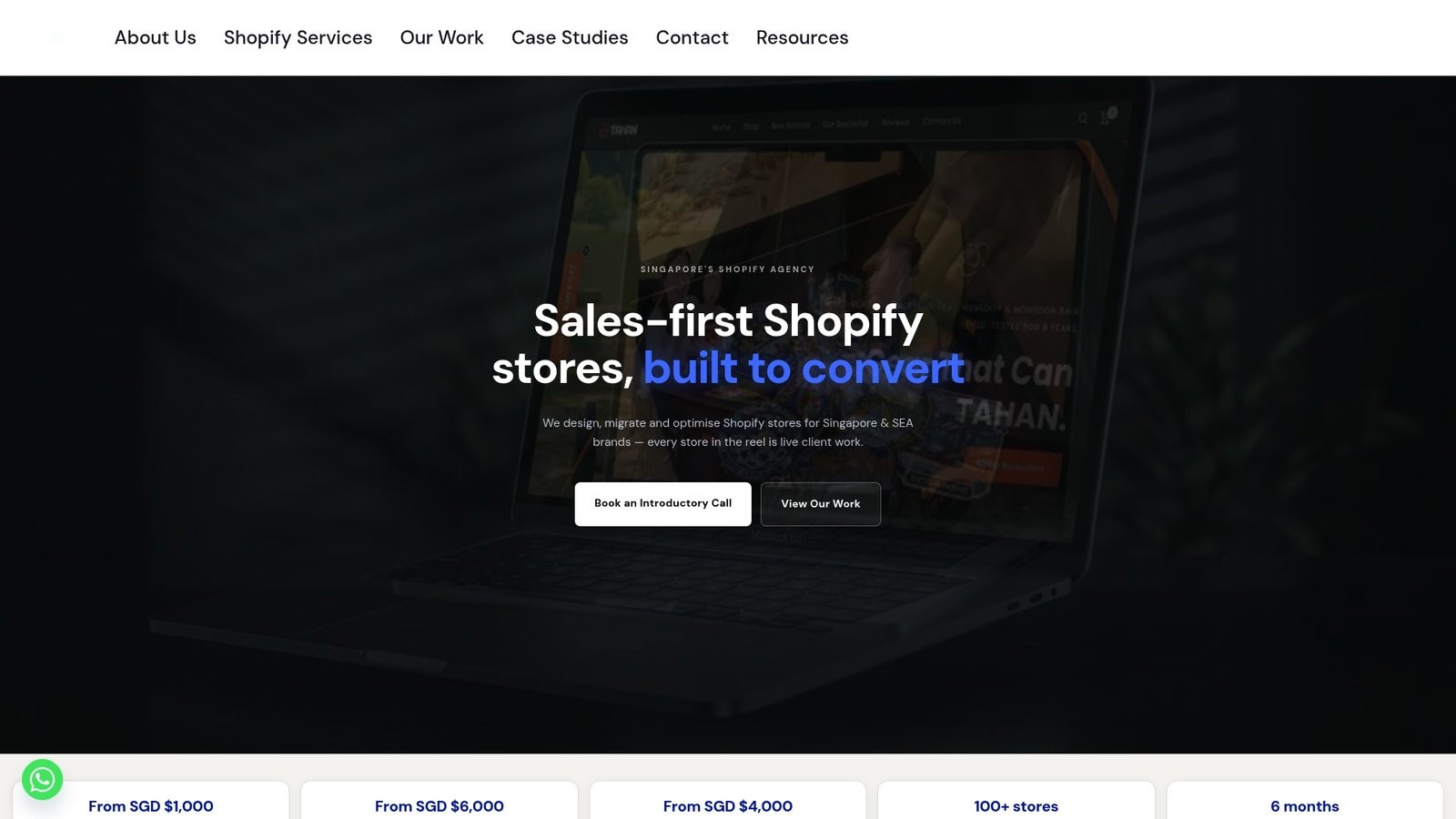
Depending on where your store stands, that might mean:
- A new Shopify build with Markets and Payments configured from the ground up, priced from 6,000 SGD.
- Store optimisation for an existing site that needs currency testing and app fixes, priced from 1,000 SGD.
- A platform migration if you’re moving to Shopify and want multi-currency built in from day one, priced from 4,000 SGD.
If you’re weighing up payment gateways alongside your currency setup, our guide to payment gateway options covers the payout side in more depth. Get in touch with Soodo to scope your project and get a fixed price before you commit.
Essential Shopify documentation and blog posts
For the exact fee tables and policy wording, go straight to Shopify’s own pages: the multi-currency overview, the pricing and rounding rules, and Shopify’s explainer on the business case for selling in multiple currencies. If you want a wider technical view, our Shopify guides and updates hub tracks platform changes as they land, and for international SEO alongside your currency setup, Shopify SEO automation is worth a look.
Sources
FAQ
How much does Shopify take from a $100 sale?
Shopify’s own transaction fees depend on your plan and payment method, and multi-currency payouts add a separate cost on top. For Singapore merchants, non-SGD payouts carry a Multi-Currency Payout fee of 1.5% on the Advanced plan or 1% on Shopify Plus, while SGD payouts carry no such fee.
Can I use multiple payment methods on Shopify?
Yes, Shopify supports several payment methods alongside Shopify Payments, including major card networks and digital wallets, depending on your region and plan. Shopify Payments itself is required if you want to offer local currency pricing through Shopify Markets.
Do I need Shopify Markets to sell in multiple currencies?
Yes, Shopify Markets combined with Shopify Payments is how you present local currencies to shoppers. Without both enabled, your store stays in a single currency regardless of where the customer is browsing from.
What happens to refunds when a currency’s exchange rate has moved?
A refund is issued in the currency the customer paid in, converted at the rate on the day of the refund rather than the original sale. If the rate has moved against you, you absorb that difference, and any conversion fee on the refund isn’t returned to you.
Should I use automatic or manual exchange rates?
Automatic rates suit small-ticket retail where prices can shift slightly day to day without customers noticing. Manual rates work better for B2B or repeat customers who expect consistent pricing over time.
Recommended

Jessica Bong
Jessica Bong is the founder of Soodo, a Singapore Shopify agency that builds, revamps and migrates Shopify stores, with every store set up to be found in AI search (GEO). She has spent over 10 years in ecommerce and runs her own Shopify brand, Patch&Bagel, where every Soodo technique is tested first. Jessica is also a WSQ-certified Shopify trainer at Equinet Academy.