
Shopify About Us Page: What to Write and How to Build It
A good Shopify About Us page tells shoppers who is behind the store, why it exists and what to do next. You add it in Shopify under Online Store > Pages, but the work is in the writing and the layout. This guide covers both, for Singapore brands that want the page to help sell.
I am Jessica Bong, founder of Soodo, a founder-led Shopify agency in Singapore. I have 10+ years in ecommerce, and we build, revamp and migrate Shopify stores for brands in Singapore and Southeast Asia. Every store we build is set up for AI search (GEO).
Key Takeaways
- An About Us page exists to build trust. It should show who you are, why the brand exists and who you serve, then point to a next step.
- Adding the page takes minutes in Shopify. Writing it well and placing it where shoppers look takes planning.
- Lead with the customer’s problem, not your company history. Use real photos of real people.
- End the page with one clear action: a collection, the Contact page or a newsletter signup.
- Link to the page from your header or footer menu, and keep the facts on it accurate, because shoppers and AI search tools both read it.
Table of Contents
- What is a Shopify About Us page for?
- What should you include on a Shopify About Us page?
- How do you write a story that feels real?
- How do you add an About Us page in Shopify?
- How should you design the page?
- What should a Singapore brand add to the page?
- How does the About Us page help AI search?
- Mistakes that weaken an About Us page
- When is it time to rebuild the store, not just the page?
- Work with a founder-led Shopify team
- Our view: the About Us page is a sales page
- FAQ
- Sources
What is a Shopify About Us page for?
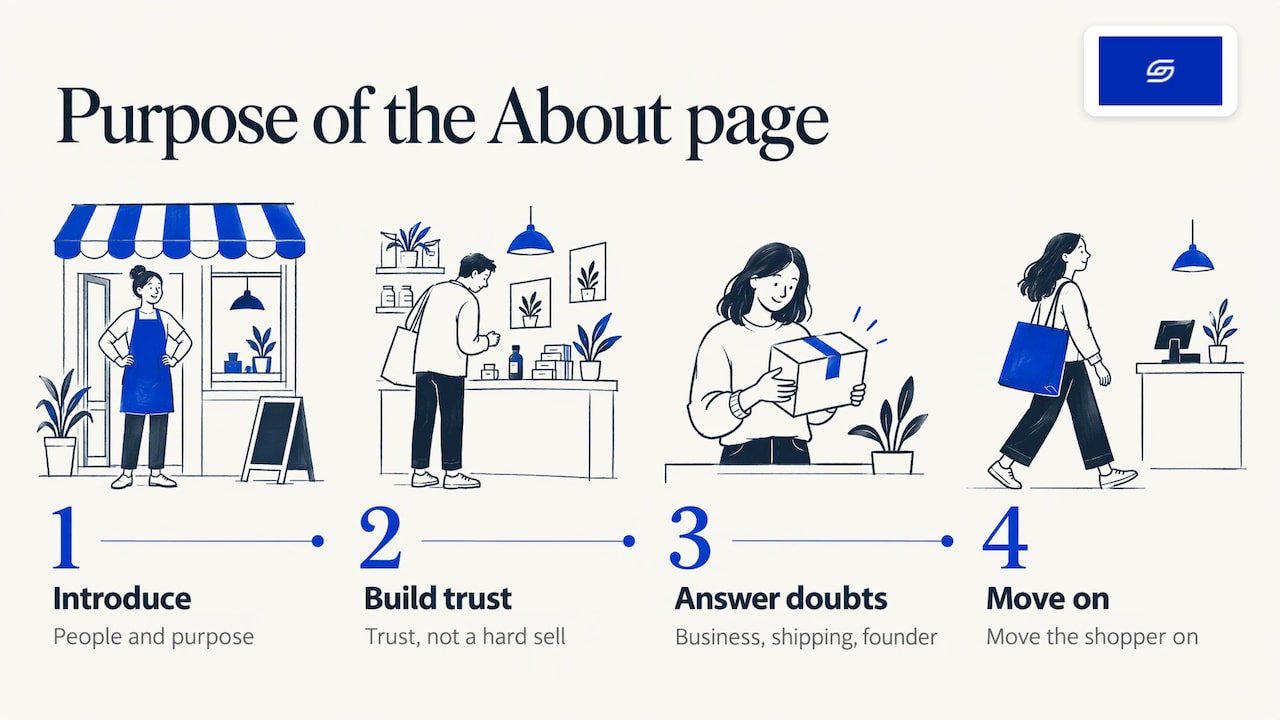
It introduces the people and purpose behind the store so shoppers can decide whether to trust you. Shopify describes the page as a way to humanise a brand, share its story, mission and values, and introduce the team. It works on trust, not on a hard sell.
That matters in Singapore, where shoppers compare many stores and marketplaces in one sitting. The Competition and Consumer Commission of Singapore has noted that successful e-commerce platforms rely on good customer experience and consumer trust to keep business coming. Your About Us page is one of the few places where you control that message in full.
Think of who reads it. They are usually people close to buying who want one more reason to say yes. They might be checking whether you are a real local business, whether you ship to them or whether the founder stands behind the product. A thin page leaves those questions open.
We treat it the same way when we plan a store. Every page, menu and app is built around how customers actually buy. The About Us page is one step in that path, so it should answer a doubt and then move the shopper on.
What should you include on a Shopify About Us page?
Include your brand story, who you serve, the people behind the store and a clear next step. Shopify’s own guidance lists these as the core elements: the origin story, a value proposition, team details with bios and photos, and calls to action.
Here is how to apply each one.
The origin story
Say why the brand started. Keep it to a few short paragraphs. Name the problem you saw, what you tried and what you built in response.
Avoid a long company timeline. Shoppers do not need every milestone. They need the one moment that explains why your product exists.
Who you serve and why you are the right choice
The page is not only about you. It should explain what you can do for the customer. Say who the product is for, in plain words.
A Singapore skincare brand might say it formulates for humid weather and sensitive skin. A homeware brand might say it designs for small HDB flats. Specific beats general every time.
The people
Show faces and names. A founder photo and a short bio do more for trust than a stock image of a team laughing at a laptop. If your team is small, say so. Small is a strength when it means someone real answers the message.
Proof that is true
Use facts you can stand behind: the year you started, where you are based, how many customers you have served, where you ship from. Only use numbers you can verify. Never invent a count or a testimonial to fill space.
One clear next step
End with an action. Shopify suggests sending visitors to a product collection, the Contact page, a newsletter signup or social media. Pick one main action and make it a button.
How do you write a story that feels real?
Start with the customer’s problem, move to your realisation, then show the solution. Write the way you speak. Shopify’s help documentation suggests that if the voice feels stiff, record yourself talking about the business and transcribe it as a first draft.
A simple structure works well:
- The problem. What was missing or broken for customers?
- The turning point. What made you decide to act?
- The product. What did you make and how is it different?
- The promise. What can a customer expect from you?
- The step. What should they do now?
Here is a short example of the tone, written for a made-up brand so you can see the shape. It is not a real client.
We started because we could not find a work bag that fit a 14-inch laptop and survived the MRT rush hour. So we designed one. Every bag is tested on our own commute before it ships. Browse the collection, or message us if you want help choosing a size.
Notice what it leaves out: no adjectives piled on adjectives, no claim that cannot be checked. Short sentences and one idea each.
Words to cut
Cut these before you publish:
- “Passionate”, “world-class” and “best-in-class”, unless you can prove them
- Long mission statements that could belong to any brand
- Lists of values with no example
- Any claim you cannot back up with a fact
How do you add an About Us page in Shopify?
Go to Online Store > Pages, click Add page, enter a title and content, set visibility and link the page in your menu. Shopify’s help centre gives the same route. Here are the steps in full, with where each one tends to go wrong.
- Open the Pages area. In your Shopify admin, choose Online Store, then Pages.
- Click Add page. Give it a plain title such as “About us” or “Our story”. A clear title helps shoppers and search tools understand the page.
- Write the content. Paste your draft into the editor. Add headings, short paragraphs and images. Where it goes wrong: a wall of text with one small photo.
- Choose a template. Many themes let you assign a custom page template, which gives you sections for image banners, team blocks and buttons. Where it goes wrong: using the default text-only template and wondering why the page feels flat.
- Set visibility. Make sure the page is visible on the online store before you publish.
- Add it to your menu. Under Online Store > Navigation, link the page in the header or footer. A page nobody can find does nothing. Where it goes wrong: publishing the page and forgetting the menu link.
- Check it on mobile. Most Singapore shoppers browse on their phones. Read the page on a phone before you call it done.
If your theme limits the layout, that is usually a sign the store needs a proper design pass. When we build a new store, the About Us page is planned with the rest of the site: where it sits in the menu, what it links to and what a shopper does after reading it. Every project includes handover training, so your team can edit the page later without calling us for each change.
How should you design the page?
Use a clear layout with space, short sections and real images. Good design supports the story, it does not compete with it.
Layout
Put a headline and one strong image at the top. Follow with the story in short blocks. Break it up with a team section, a few facts and a final button.
Keep paragraphs to three or four lines. Use subheadings so a shopper scanning on a phone can still find the point.
Images
Use photos of the founder, the team, the workshop or the product being made. Real images signal a real business. If you ship from Singapore, show where it happens.
Calls to action
One button is enough. Match it to what a new visitor needs most:
| Visitor need | Best button |
|---|---|
| Wants to see products | Shop the collection |
| Has a question | Contact us |
| Not ready to buy | Join the newsletter |
| Wants to follow the brand | Follow on social media |
If your About Us page and homepage both feel weak, our guide to Shopify homepage design gives a quick audit you can run. For the trust cues that sit around checkout, see Shopify trust signals.
What should a Singapore brand add to the page?
Add local facts that show you are a real, reachable business. Shoppers in Singapore respond to clear signs of who is behind a store and where to reach them.
Consider including:
- Where you are based. A Singapore address or a clear statement that you operate from Singapore.
- How to reach you. An email, a WhatsApp link or a contact form. Make it easy.
- Shipping and delivery context. A line on where you ship and from where, linking to your policy pages.
- Business details. Your registered business name and, if you wish, your UEN.
- Data protection contact. Under Singapore’s Personal Data Protection Act, organisations must designate a data protection officer and make information about their data protection practices available, as the PDPC explains. Many brands put the contact in the footer and link it from the About Us or Contact page.
If you sell across Southeast Asia, say which markets you serve. A short line saves shoppers from guessing.
How does the About Us page help AI search?
A clear About Us page gives AI search tools plain facts about who you are and what you sell. Tools that summarise brands for shoppers draw on the content of your site. If your page states your name, location, products and audience in simple sentences, there is more accurate material to work from.
That is why we set up every store for AI search, known as GEO. You can read our explainer on what GEO is. Write the About Us page as if a stranger needed to describe your brand in two sentences, because sometimes a machine will.
Soodo does not offer a monthly GEO or SEO service. For long-term GEO growth after launch, we work through specialist partners.
Mistakes that weaken an About Us page
Most weak pages share the same few faults.
- Too much about the company, too little about the customer. Turn every paragraph toward what it means for the shopper.
- No people. A page with no names or faces feels like a template.
- No next step. The shopper reaches the end and has nowhere to go.
- Hidden in the menu. If the link is buried, few will read it.
- Claims with no basis. Never state a number or award you cannot prove.
- Out of date. Old team photos, dead links and past offers damage trust faster than having no page.
A quick test: read the page aloud. If you would not say a sentence to a customer across a counter, rewrite it.
When is it time to rebuild the store, not just the page?
When the page is only one symptom of a store that no longer matches how you sell. If the About Us page is hard to edit, the menu is cluttered or the theme limits every change, the fix is larger than a rewrite.
There are three common routes:
| Situation | Route | Starting price |
|---|---|---|
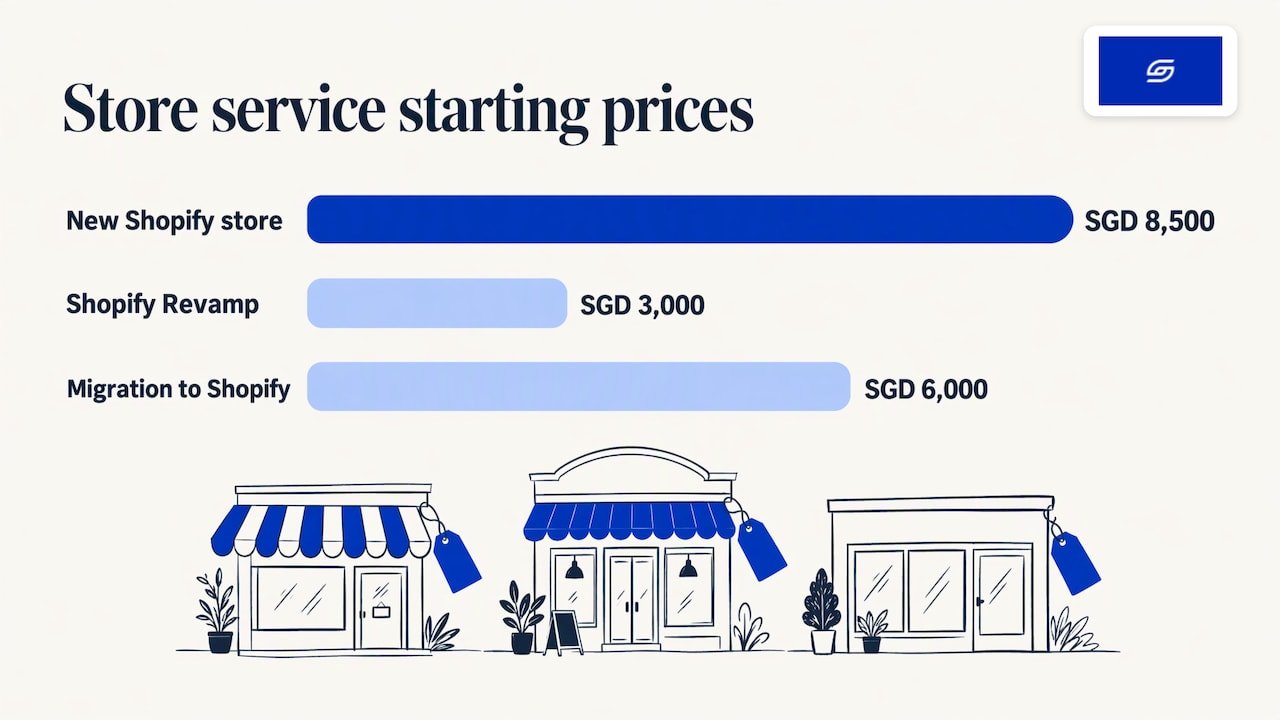
| You have no store yet | New Shopify store | From SGD 8,500 |
| Your Shopify store looks dated or leaks sales | Shopify Revamp | From SGD 3,000 |
| You sell on WooCommerce and want to move | Migration to Shopify | From SGD 6,000 |
No GST is added to these prices, as Soodo is not GST-registered. To compare the options, read Shopify Revamp vs Rebuild vs Migration. If you are coming from WooCommerce, our guide to WooCommerce to Shopify migration in Singapore shows what moves across.
Work with a founder-led Shopify team
If you want the About Us page, and the whole store around it, planned for how your customers buy, we can build it. Soodo is a Shopify Partner with 30+ live stores. Jessica Bong, the founder, leads strategy and a dedicated developer builds.
We run our own ecommerce brand, Patch&Bagel, and test our recommendations there first. Every project includes handover training and 6 months of post-launch fixes: if something we built breaks, we fix it. You get unlimited revisions within the agreed scope.
Projects start on set monthly start dates. A 50% non-refundable deposit secures your start date, and the balance is due on completion. The timeline and start date are agreed before we begin. We take on a small number of projects each month, by application. See the new Shopify store page to start.
Our view: the About Us page is a sales page
Many owners treat the About Us page as a place to write about themselves. We see it differently. It is a sales page that happens to be about you.
A shopper who reaches it is already interested. They are asking one question: can I trust this brand? Our job is to answer it fast and then hand them back to the products.
That is why we build stores sales-first. We map how customers actually buy, then place each page, menu link and app where it helps them decide. The About Us page gets the same care as a product page.
I have worked in ecommerce for over ten years, and I teach Shopify as a WSQ trainer at Equinet Academy. The same lesson comes up again and again. Stores that explain who they are, in plain words and with real faces, make shoppers feel safe. Stores that hide behind slogans do not.
So write the page last, after you know who your customer is. Then make it easy to edit, so it stays true as the brand grows. That is why handover training is part of every project we deliver.
Soodo
FAQ
Where should the About Us page link from?
Link it from your header menu or your footer, and ideally from the homepage too. Shoppers look for it when they are deciding whether to trust you. In Shopify you manage this under Online Store > Navigation.
How long should a Shopify About Us page be?
Long enough to tell the story and answer the shopper’s doubts, short enough to scan on a phone. For most brands that is a few short sections with a headline, a story, a team block and one button. Cut anything that does not help a shopper decide.
Do I need a custom template for the page?
Not always, but a custom template gives you more control over layout, images and buttons than a plain text page. Many Shopify themes include section-based templates you can assign to the page. If your theme makes this hard, a store revamp can fix the layout across the whole site.
Should the About Us page mention the founder?
Yes, if the founder is part of the brand’s story. Real names and photos build trust. Keep the bio short and tie it to why the brand exists.
Can Soodo write and build the About Us page as part of a project?
The page is planned as part of the wider store when we build a new store, revamp or migrate. Every project includes handover training, so your team can edit the page after launch. Scope and start date are agreed before we begin.
Sources
- About Us Page Examples and How To Write One (2026), Shopify
- About Us page, Shopify Help Center
- CCCS market study on e-commerce platforms
- Data protection obligations, PDPC
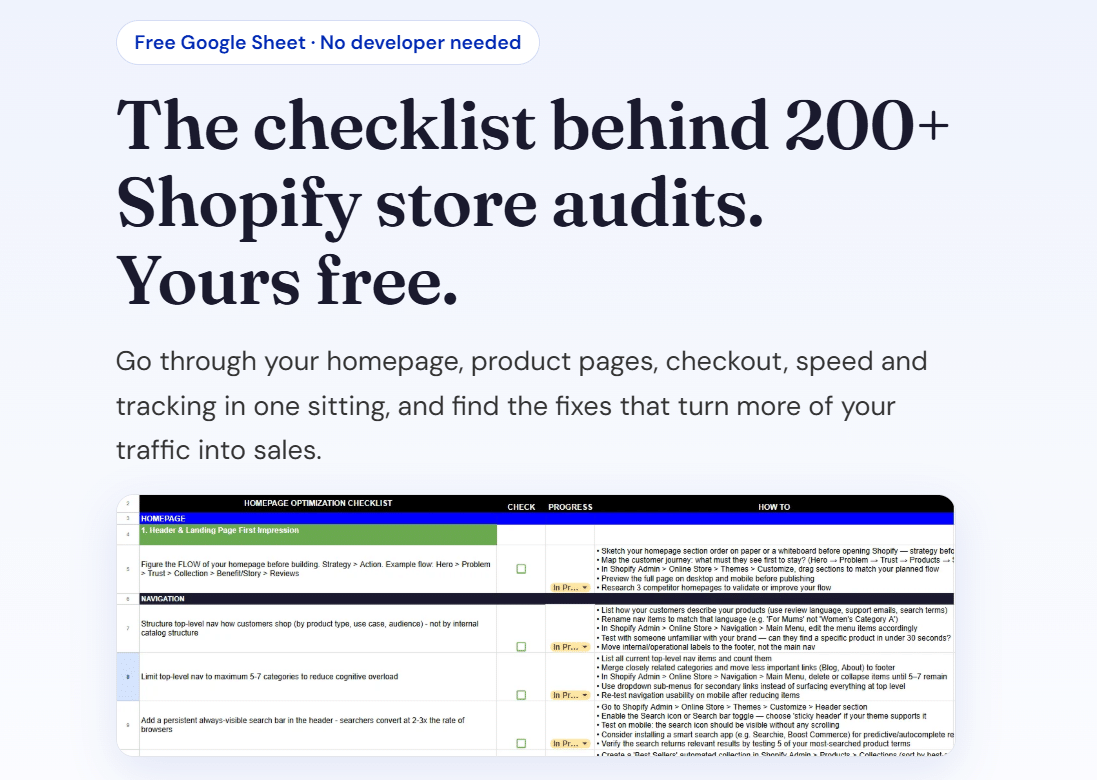
Next steps: download the free Shopify optimisation checklist or apply for a project slot.
Recommended

Jessica Bong
Jessica Bong is the founder of Soodo, a Singapore Shopify agency that builds, revamps and migrates Shopify stores, with every store set up to be found in AI search (GEO). She has spent over 10 years in ecommerce and runs her own Shopify brand, Patch&Bagel. Jessica is also a WSQ-certified Shopify trainer at Equinet Academy.